
Ingredients
Equipment
Method
Step 1 – Prep the Bread Cubes
- Preheat your oven to 350°F (175°C). Spread the cubed bread on a baking sheet and toast for 10–15 minutes, stirring halfway through, until the bread is golden and slightly dry. This helps it absorb flavor without getting soggy.
Step 2 – Sauté the Vegetables & Herbs
- In a large pan over medium heat, melt the butter. Add onion and celery and cook for 5–7 minutes, until soft and fragrant. Add garlic, sage, thyme, and rosemary, and cook another 1–2 minutes. Remove from heat.
Step 3 – Mix the Bread & Aromatics
- Place the toasted bread cubes in a large mixing bowl. Pour the sautéed mixture over the bread and add the parsley. Gently toss to distribute the flavors evenly.
Step 4 – Add the Liquid Ingredients
- In a small bowl, whisk together 2 cups broth and eggs. Pour over the bread mixture, tossing gently until evenly moistened.
- If the mixture seems dry, add more broth a little at a time until the texture is soft but not soggy.
Step 5 – Season & Transfer to Dish
- Add salt and pepper to taste. Transfer the mixture into a lightly greased baking dish, spreading evenly.
Step 6 – Bake the Stuffing
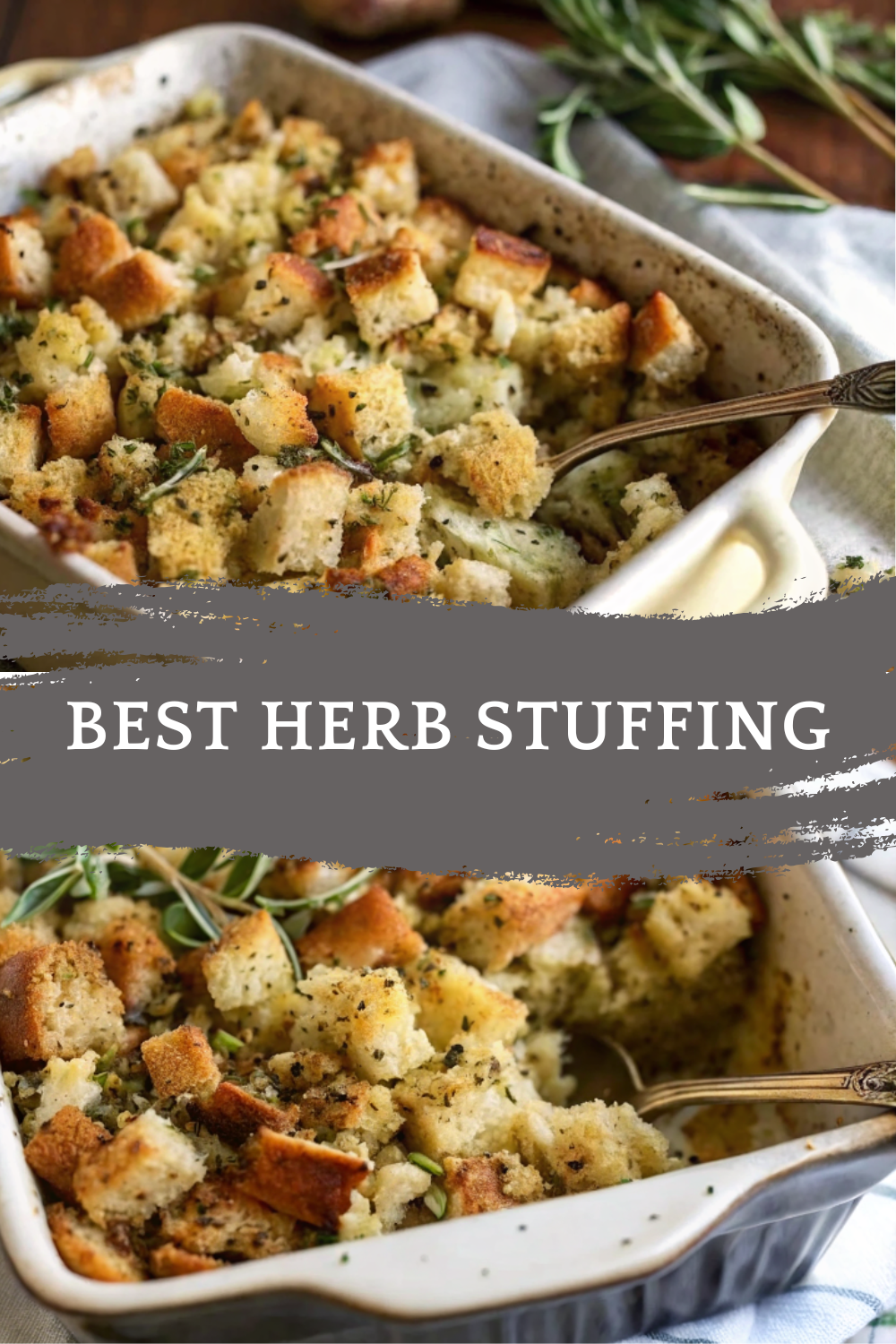
- Cover the dish with foil and bake for 30 minutes at 350°F. Then uncover and bake for an additional 15 minutes, until the top is golden brown and crisp.
Step 7 – Serve Warm
- Remove from the oven, let rest for 5 minutes, then garnish with extra parsley or thyme sprigs. Serve hot and enjoy the comforting aroma of homemade stuffing.
Notes
🧊 Storage & Reheating
Refrigerator: Store leftovers in an airtight container for up to 3 days.
Freezer: Freeze for up to 2 months. Reheat in the oven until warmed through.
Reheating Tip: Add a splash of broth before reheating to keep the stuffing moist.
🥄 Variations
Vegetarian Version: Use vegetable broth and add sautéed mushrooms for extra flavor.
Nutty Crunch: Add chopped pecans or walnuts for texture.
Cornbread Stuffing: Swap half the bread for cornbread cubes for a Southern twist.
Savory-Sweet Option: Add dried cranberries or apples for a subtle sweetness.
Vegan Option: Use olive oil instead of butter, vegetable broth, and skip the eggs.
Whole Grain Version: Use whole wheat or multigrain bread cubes.
Garlic Butter Herb Stuffing: Double the garlic and butter for a richer, bolder version.
❓ 10 FAQs
1. What’s the best bread to use?
Crusty French bread, sourdough, or Italian loaves work best — they hold up well and soak in the broth beautifully. 2. Can I use fresh bread?
Yes, but toast it first to remove excess moisture. 3. Can I make this ahead of time?
Absolutely. Assemble the stuffing, cover, and refrigerate for up to 24 hours before baking. 4. How can I make it gluten-free?
Use gluten-free bread and check your broth ingredients. 5. Can I stuff this into a turkey?
Yes, but ensure the internal temperature of the stuffing reaches 165°F for safety. 6. Why is my stuffing soggy?
You likely added too much broth. The bread should be moist but not dripping wet before baking. 7. Why is my stuffing dry?
Add a bit more broth or cover with foil while baking to trap moisture. 8. Can I skip the eggs?
You can, but the eggs help bind the mixture and give it a light, fluffy texture. 9. Can I use dried herbs instead of fresh?
Yes — use about one-third the amount since dried herbs are more concentrated. 10. What pairs best with herb stuffing?
It’s perfect with roasted chicken, turkey, mashed potatoes, gravy, or green beans almondine. 🏁 Conclusion This Best Herb Stuffing captures everything that makes holiday cooking special — buttery aroma, fresh herbs, and that perfect contrast between crisp and soft. Each forkful is packed with the warmth of rosemary and thyme, the savoriness of onions and celery, and the richness of golden-baked bread. It’s simple enough for weeknight comfort, yet elegant enough for your Thanksgiving or Christmas table. Serve it hot, sprinkle with fresh herbs, and watch it disappear before the main course even starts.
Crusty French bread, sourdough, or Italian loaves work best — they hold up well and soak in the broth beautifully. 2. Can I use fresh bread?
Yes, but toast it first to remove excess moisture. 3. Can I make this ahead of time?
Absolutely. Assemble the stuffing, cover, and refrigerate for up to 24 hours before baking. 4. How can I make it gluten-free?
Use gluten-free bread and check your broth ingredients. 5. Can I stuff this into a turkey?
Yes, but ensure the internal temperature of the stuffing reaches 165°F for safety. 6. Why is my stuffing soggy?
You likely added too much broth. The bread should be moist but not dripping wet before baking. 7. Why is my stuffing dry?
Add a bit more broth or cover with foil while baking to trap moisture. 8. Can I skip the eggs?
You can, but the eggs help bind the mixture and give it a light, fluffy texture. 9. Can I use dried herbs instead of fresh?
Yes — use about one-third the amount since dried herbs are more concentrated. 10. What pairs best with herb stuffing?
It’s perfect with roasted chicken, turkey, mashed potatoes, gravy, or green beans almondine. 🏁 Conclusion This Best Herb Stuffing captures everything that makes holiday cooking special — buttery aroma, fresh herbs, and that perfect contrast between crisp and soft. Each forkful is packed with the warmth of rosemary and thyme, the savoriness of onions and celery, and the richness of golden-baked bread. It’s simple enough for weeknight comfort, yet elegant enough for your Thanksgiving or Christmas table. Serve it hot, sprinkle with fresh herbs, and watch it disappear before the main course even starts.