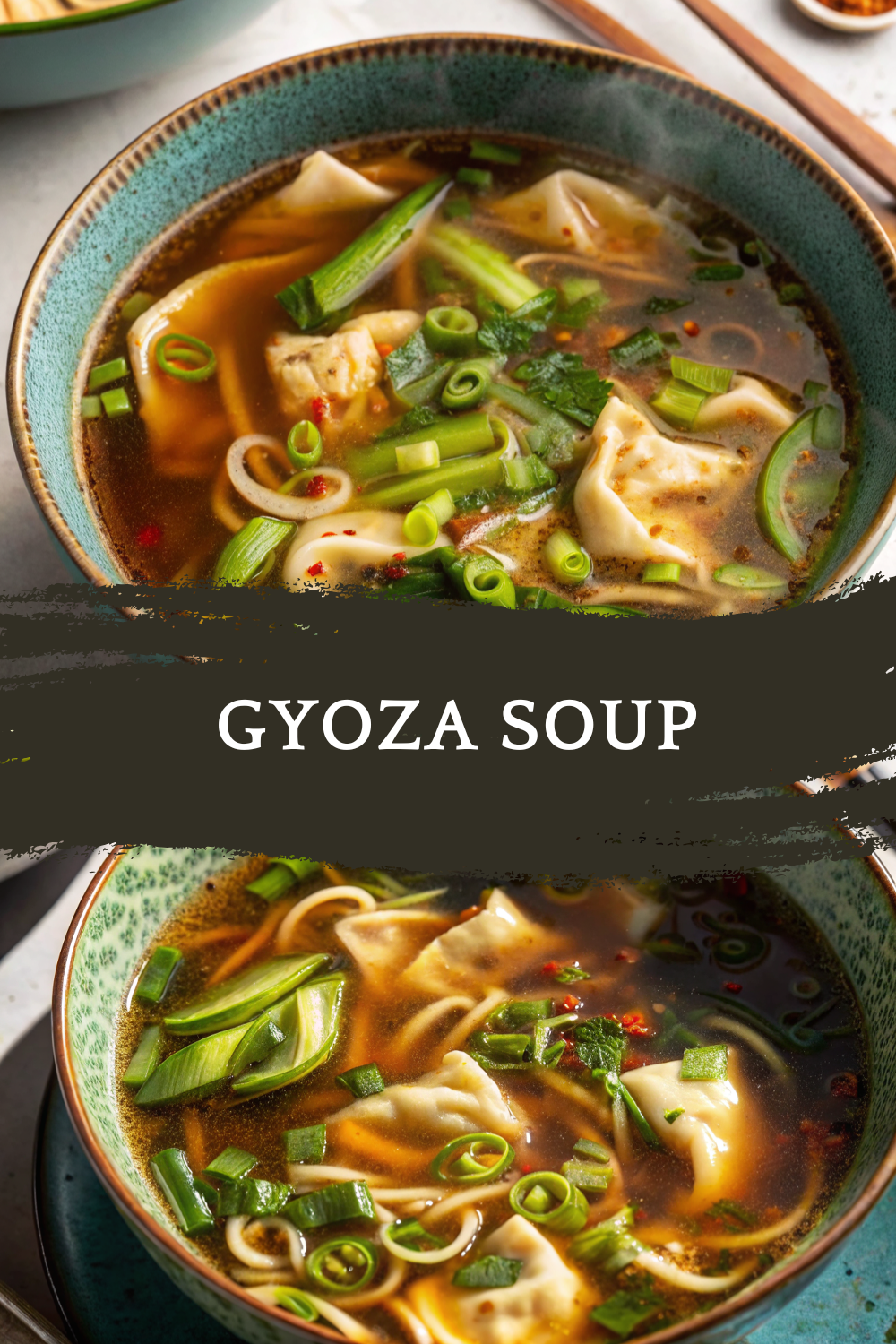

Ingredients
Equipment
Method
Step 1: Prepare the Aromatics
- Heat a small amount of oil in a pot over medium heat. Add the ginger and garlic. Sauté for 30–60 seconds until fragrant but not browned.
Step 2: Add the Vegetables
- Add the courgette, spring onions, and pak choi. Stir well and cook for 2–3 minutes until the vegetables begin to soften.
Step 3: Pour in the Stock
- Add the vegetable stock and soy sauce. Stir to combine and bring to a gentle simmer.
Step 4: Add the Gyoza
- Add the vegetable or chicken gyoza directly into the pot. Simmer for 5–7 minutes, or until the gyoza are heated through and soft.
Step 5: Adjust Seasoning
- Season the soup with salt, pepper, and chilli oil. Taste and adjust soy sauce or spices as needed.
Step 6: Serve Hot
- Ladle the soup into bowls, making sure each serving gets dumplings and vegetables. Garnish with extra spring onions or a drizzle of chilli oil if desired.
Notes
🧊 Storage & Reheating
Refrigerator Store leftovers for up to 2 days. Gyoza may soften further but will still taste delicious. Freezer Freeze the broth separately from the dumplings.
Frozen assembled soup becomes mushy. Reheating Stovetop: Simmer gently for 3–4 minutes Microwave: 1–2 minutes If the broth thickens, add a splash of water. 🥄 Variations Spicy Version: Add extra chilli oil or a pinch of red pepper flakes. Protein Boost: Add shredded chicken or tofu cubes. Richer Broth: Add a teaspoon of sesame oil (halal and alcohol-free). Vegetable Add-Ins: Mushrooms, baby corn, bok choy, spinach, or carrots. Udon Gyoza Soup: Add udon noodles for a heartier meal. Creamy Japanese Soup: Stir in a splash of coconut milk. Ginger-Lovers: Add extra grated ginger for a stronger aromatic profile. ❓ 10 FAQs
1. Can I use frozen gyoza? Yes! Add them directly to the soup and simmer until warmed through. 2. Can I use chicken broth instead of vegetable? Yes, chicken broth adds a richer flavor. 3. Is soy sauce halal? Yes—regular soy sauce contains no alcohol. Avoid mirin and sake (not used here). 4. Can I make this soup spicier? Add more chilli oil or sliced red chili. 5. What other dumplings can I use? Chicken dumplings, vegetable dumplings, or shrimp dumplings work well. 6. Can I air-fry the gyoza first? Yes! Crispy dumplings add great texture to the soup. 7. Can I make the broth thicker? Simmer longer or add a teaspoon of cornstarch mixed with water. 8. What vegetables work best? Pak choi, courgette, spring onions, mushrooms, and carrots. 9. How do I store leftover gyoza soup? Keep dumplings separate if planning to reheat later. 10. Can this be made gluten-free? Use gluten-free soy sauce and gluten-free dumplings. 🏁 Conclusion This Gyoza Soup (Japanese Dumpling Soup) is the perfect balance of simplicity, comfort, and delicious flavor. With soft dumplings, warming ginger, nutrient-rich vegetables, and an aromatic broth, it creates a comforting bowl that feels both light and satisfying. This recipe is incredibly easy, quick to prepare, and ideal for anyone wanting cozy Japanese-inspired flavors without spending hours in the kitchen. Whether you enjoy it as a light dinner, a warm lunch, or a soothing meal when you feel under the weather, this soup brings calm, comfort, and nourishment in every spoonful. It’s proof that a beautiful meal doesn’t need to be complicated—just thoughtfully prepared with fresh ingredients and bold flavors.
Refrigerator Store leftovers for up to 2 days. Gyoza may soften further but will still taste delicious. Freezer Freeze the broth separately from the dumplings.
Frozen assembled soup becomes mushy. Reheating Stovetop: Simmer gently for 3–4 minutes Microwave: 1–2 minutes If the broth thickens, add a splash of water. 🥄 Variations Spicy Version: Add extra chilli oil or a pinch of red pepper flakes. Protein Boost: Add shredded chicken or tofu cubes. Richer Broth: Add a teaspoon of sesame oil (halal and alcohol-free). Vegetable Add-Ins: Mushrooms, baby corn, bok choy, spinach, or carrots. Udon Gyoza Soup: Add udon noodles for a heartier meal. Creamy Japanese Soup: Stir in a splash of coconut milk. Ginger-Lovers: Add extra grated ginger for a stronger aromatic profile. ❓ 10 FAQs
1. Can I use frozen gyoza? Yes! Add them directly to the soup and simmer until warmed through. 2. Can I use chicken broth instead of vegetable? Yes, chicken broth adds a richer flavor. 3. Is soy sauce halal? Yes—regular soy sauce contains no alcohol. Avoid mirin and sake (not used here). 4. Can I make this soup spicier? Add more chilli oil or sliced red chili. 5. What other dumplings can I use? Chicken dumplings, vegetable dumplings, or shrimp dumplings work well. 6. Can I air-fry the gyoza first? Yes! Crispy dumplings add great texture to the soup. 7. Can I make the broth thicker? Simmer longer or add a teaspoon of cornstarch mixed with water. 8. What vegetables work best? Pak choi, courgette, spring onions, mushrooms, and carrots. 9. How do I store leftover gyoza soup? Keep dumplings separate if planning to reheat later. 10. Can this be made gluten-free? Use gluten-free soy sauce and gluten-free dumplings. 🏁 Conclusion This Gyoza Soup (Japanese Dumpling Soup) is the perfect balance of simplicity, comfort, and delicious flavor. With soft dumplings, warming ginger, nutrient-rich vegetables, and an aromatic broth, it creates a comforting bowl that feels both light and satisfying. This recipe is incredibly easy, quick to prepare, and ideal for anyone wanting cozy Japanese-inspired flavors without spending hours in the kitchen. Whether you enjoy it as a light dinner, a warm lunch, or a soothing meal when you feel under the weather, this soup brings calm, comfort, and nourishment in every spoonful. It’s proof that a beautiful meal doesn’t need to be complicated—just thoughtfully prepared with fresh ingredients and bold flavors.