
Ingredients
Equipment
Method
Step 1 — Sauté the aromatics
- Heat olive oil in a soup pot over medium heat.
- Add onion, carrots, and celery.
- Cook for 6–7 minutes until softened and fragrant.
- Add minced garlic and cook 1 more minute.
Step 2 — Add hearty vegetables
- Add diced potatoes and butternut squash.
- Stir well to coat the vegetables in oil and aromatics.
Step 3 — Add tomatoes, broth & herbs
- Pour in the diced tomatoes and vegetable broth.
- Add oregano, basil, thyme, and the bay leaf.
- Season with salt and black pepper.
- Stir to combine.
Step 4 — Simmer
- Bring the soup to a boil, then reduce heat to low.
- Simmer for 20–25 minutes, until potatoes and squash soften.
Step 5 — Add zucchini & beans
- Stir in the chopped zucchini and the rinsed beans.
- Simmer another 8 minutes.
Step 6 — Add pasta
- Add the small pasta directly to the pot.
- Simmer for 10–12 minutes, until pasta is al dente.
Step 7 — Add greens
- Stir in kale or spinach.
- Let it wilt for 2 minutes.
Step 8 — Adjust & serve
- Taste and adjust seasoning with salt or pepper.
- Remove the bay leaf before serving.
- Ladle into bowls and enjoy warm winter comfort.
Notes
🧊 Storage & Reheating
Refrigerator Store for up to 5 days in airtight containers. Pasta absorbs liquid — add broth when reheating. Freezer Freeze without pasta for up to 2 months. Add fresh pasta after reheating. Reheating Warm on low heat. Add extra broth to thin if needed. 🥄 Variations
1. High-Protein Minestrone Add chickpeas or extra beans. 2. Creamy Winter Minestrone Stir in ½ cup cream or coconut milk. 3. Low-Carb Version Replace pasta with cauliflower or extra zucchini. 4. Spicy Minestrone Add chili flakes or diced jalapeño. 5. Italian-Herb Boost Add fresh basil or rosemary at the end. 6. Veggie Expansion Add leeks, green beans, turnips, or cabbage. 7. Tomato-Rich Minestrone Add 2 tablespoons tomato paste. 8. Slow Cooker Version Cook everything except pasta & greens for 6 hours on low. 9. Gluten-Free Version Use gluten-free pasta. 10. Brothy Minestrone Add 1 extra cup of vegetable broth. ❓ 10 FAQs
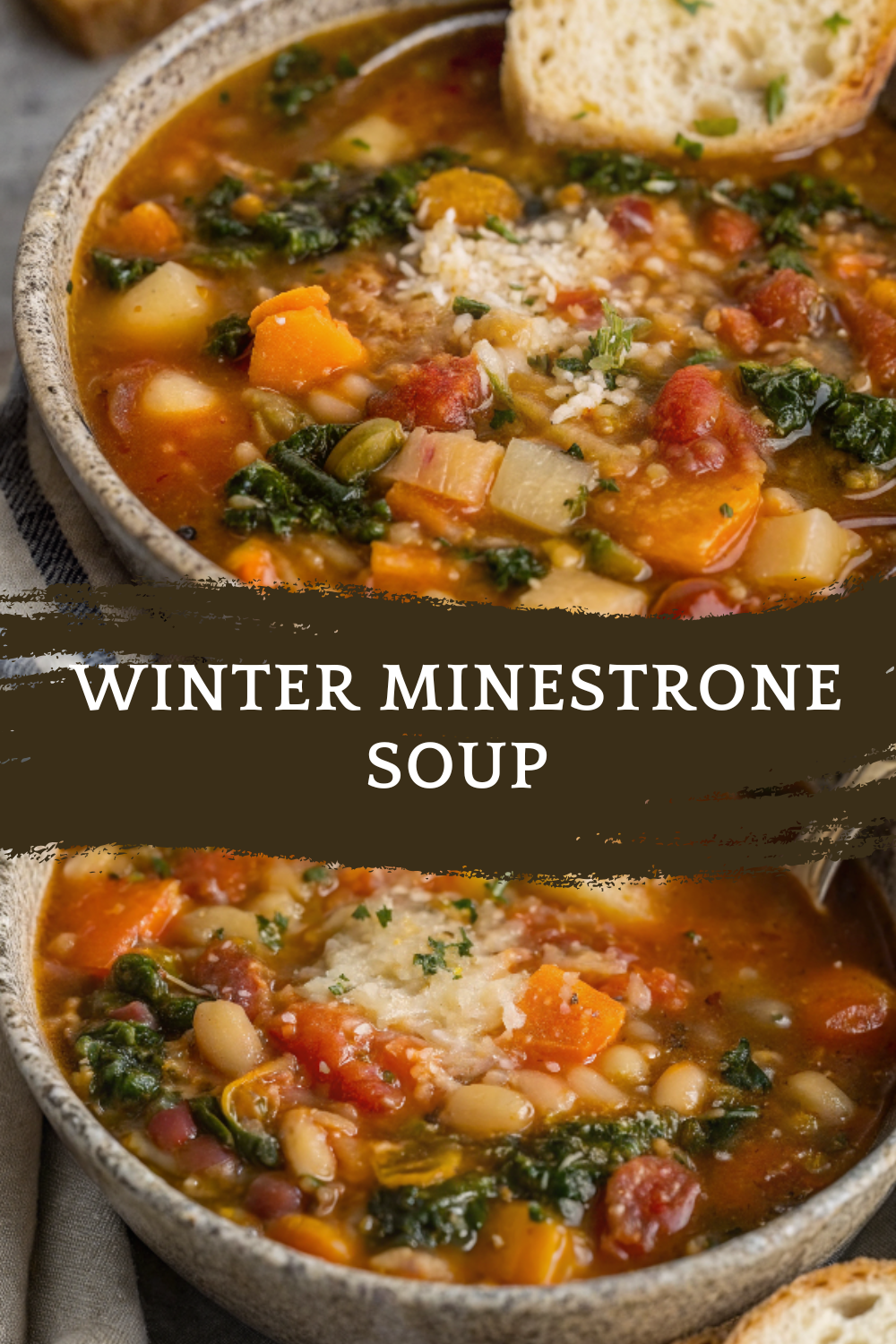
1. What makes it a Winter Minestrone? It uses hearty seasonal vegetables like squash, potatoes, and kale. 2. Can I make it ahead? Yes — it tastes even better the next day. 3. Can I skip the pasta? Yes — it becomes a low-carb vegetable stew. 4. Can I blend part of the soup? Yes — blend 1 cup for a thicker texture. 5. Can I add meat? Add shredded chicken or turkey if you like. 6. What greens work best? Kale, spinach, Swiss chard, or collard greens. 7. Can I freeze it? Yes — freeze before adding pasta. 8. Can I use fresh herbs? Absolutely — add them at the end for brightness. 9. What broth is best? Vegetable broth keeps it vegetarian, but chicken broth works too. 10. What pasta shape works best? Short shapes like ditalini, elbows, or small shells. 🏁 Conclusion This Winter Minestrone Soup is truly a celebration of vegetables — hearty potatoes, sweet squash, tender beans, bright greens, and soft pasta all simmered in a warm, herb-infused tomato broth. It’s nourishing, flavorful, and incredibly comforting, making it perfect for chilly evenings, meal prep, or whenever you want a bowl of pure wholesome goodness. With its rich texture, rustic charm, and beautiful variety of vegetables, this soup feels like a hug in a bowl — warm, cozy, and satisfying.
Refrigerator Store for up to 5 days in airtight containers. Pasta absorbs liquid — add broth when reheating. Freezer Freeze without pasta for up to 2 months. Add fresh pasta after reheating. Reheating Warm on low heat. Add extra broth to thin if needed. 🥄 Variations
1. High-Protein Minestrone Add chickpeas or extra beans. 2. Creamy Winter Minestrone Stir in ½ cup cream or coconut milk. 3. Low-Carb Version Replace pasta with cauliflower or extra zucchini. 4. Spicy Minestrone Add chili flakes or diced jalapeño. 5. Italian-Herb Boost Add fresh basil or rosemary at the end. 6. Veggie Expansion Add leeks, green beans, turnips, or cabbage. 7. Tomato-Rich Minestrone Add 2 tablespoons tomato paste. 8. Slow Cooker Version Cook everything except pasta & greens for 6 hours on low. 9. Gluten-Free Version Use gluten-free pasta. 10. Brothy Minestrone Add 1 extra cup of vegetable broth. ❓ 10 FAQs
1. What makes it a Winter Minestrone? It uses hearty seasonal vegetables like squash, potatoes, and kale. 2. Can I make it ahead? Yes — it tastes even better the next day. 3. Can I skip the pasta? Yes — it becomes a low-carb vegetable stew. 4. Can I blend part of the soup? Yes — blend 1 cup for a thicker texture. 5. Can I add meat? Add shredded chicken or turkey if you like. 6. What greens work best? Kale, spinach, Swiss chard, or collard greens. 7. Can I freeze it? Yes — freeze before adding pasta. 8. Can I use fresh herbs? Absolutely — add them at the end for brightness. 9. What broth is best? Vegetable broth keeps it vegetarian, but chicken broth works too. 10. What pasta shape works best? Short shapes like ditalini, elbows, or small shells. 🏁 Conclusion This Winter Minestrone Soup is truly a celebration of vegetables — hearty potatoes, sweet squash, tender beans, bright greens, and soft pasta all simmered in a warm, herb-infused tomato broth. It’s nourishing, flavorful, and incredibly comforting, making it perfect for chilly evenings, meal prep, or whenever you want a bowl of pure wholesome goodness. With its rich texture, rustic charm, and beautiful variety of vegetables, this soup feels like a hug in a bowl — warm, cozy, and satisfying.